 Amiga Hardware Database
Hersteller “Sunrize Industries”
7 Erweiterungen in der Datenbank
Hersteller Sunrize Industries, USA | Datum 1991 | Amiga A2000, A3000, A4000 | Schnittstelle Zorro II | Autoconfig-ID 2127 / 1 |
- DSP: Analog Devices 2105 (10 MIPS, Befehlausführung in 100 ns)
- 64 kB schnelles SRAM, erweiterbar auf 256 kB
- 8 kB ROM
- 12-Bit-Wiedergabe und -Aufnahme (direkt auf die Festplatte)
- maximal 4 Audio-Kanäle (Tonspuren)
- 68000-Prozessor: 1 Kanal mit 44 kHz
- 68030-Prozessor: 4 Kanäle mit 44 kHz
- vollduplex
- Samplingraten: 7 - 82 kHz (nur mono)
- Frequenzgang: 20 Hz - 20 kHz (-3 dB)
- typischer Signal-Rausch-Abstand: 70 dB
- zwei Anti-Aliasing-Filter achter Ordnung
- Samples werden in 16-Bit-Format gespeichert, um Kompatibilität mit der AD516 zu wahren
- digitale Verstärkung in 100 Levels
- LTC-SMPTE-Timecodes werden verarbeitet (24, 25, 29.97, 30 fps, drop und non-drop)
- Anschlüsse: unsymmetrischer Audio-Eingang und -Ausgang für Line-Pegel (2×Cinch-Buchse), SMPTE-Eingang (1×Cinch-Buchse)
- optionaler digitaler Ein-/Ausgang war geplant und beworben (DD524), aber nie realisiert
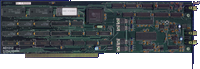
Vorderseite
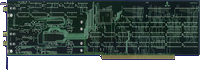
Rückseite
- Studio16-205-1.dms
Studio 16 v2.05, disk 1
289 kB - Studio16-205-2.dms
Studio 16 v2.05, disk 2
256 kB - Studio16-208-1.dms
Studio 16 v2.08, disk 1
305 kB - Studio16-208-2.dms
Studio 16 v2.08, disk 2
349 kB - Studio16-300a-1.dms
Studio 16 v3.00a, disk 1
406 kB - Studio16-300a-2.dms
Studio 16 v3.00a, disk 2
479 kB - Studio16-300b-1.dms
Studio 16 v3.00b, disk 1
405 kB - Studio16-300b-2.dms
Studio 16 v3.00b, disk 2
421 kB - Studio16-301-1.dms
Studio 16 v3.01, disk 1
412 kB - Studio16-301-2.dms
Studio 16 v3.01, disk 2
425 kB
Werbung (US)
1991-05
Werbung (DE)
1991-10
Werbung (DE)
1991-12
Werbung (US)
1991-12
Werbung (US)
1992-08
Hersteller Sunrize Industries, USA | Datum 1992 | Amiga A2000, A3000, A4000 | Schnittstelle Zorro II | Autoconfig-ID 2127 / 2 |
- DSP: Analog Devices 2105 (10 MIPS, Befehlausführung in 100 ns)
- 256 kB SRAM
- 8 kB ROM
- 16-Bit-Wiedergabe und -Aufnahme (direkt auf die Festplatte) mehrerer Kanäle (Tonspuren)
- 68000-Prozessor: 5 Kanäle mit 44 kHz
- 68030-Prozessor: 8 Kanäle mit 44 kHz
- zweifache A/D- und D/A-Wandler (16 Bit, Delta-Sigma) mit digitalen Anti-Aliasing-Filtern
- 64-faches Oversampling
- vollduplex
- vierzehn Sampling-Raten von 5.5 - 48 kHz
- typischer Signal-Rausch-Abstand: 87 dB
- MIDI-Kontrolle und -Autosynchronisation über Bars & Pipes
- keine Unterstützung von MIDI-Clock
- Frequenzgang: 15 Hz - 22 kHz (-3 dB)
- Balance und Lautstärke jedes Kanals kann unabhängig eingestellt werden und ist über MIDI steuerbar
- digitale Verstärkung in 16 Levels
- LTC-SMPTE-Timecodes werden verarbeitet (24, 25, 29.97, 30 fps, drop und non-drop)
- Anschlüsse: unsymmetrischer Audio-Eingang und -Ausgang für Line-Pegel (je 2×Cinch-Buchse), SMPTE-Eingang (1×Cinch-Buchse)
- optionaler digitaler Ein-/Ausgang war geplant und beworben (DD524), aber nie realisiert
- AHI-Treiber
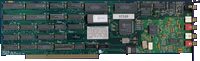
Vorderseite
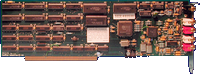
Vorderseite
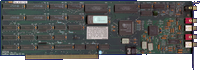
Vorderseite
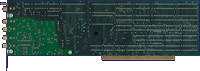
Rückseite
- SMPTEOut-301.dms
SMPTE Out v3.01
140 kB - Studio16-205-1.dms
Studio 16 v2.05, disk 1
289 kB - Studio16-205-2.dms
Studio 16 v2.05, disk 2
256 kB - Studio16-208-1.dms
Studio 16 v2.08, disk 1
305 kB - Studio16-208-2.dms
Studio 16 v2.08, disk 2
349 kB - Studio16-300a-1.dms
Studio 16 v3.00a, disk 1
406 kB - Studio16-300a-2.dms
Studio 16 v3.00a, disk 2
479 kB - Studio16-300b-1.dms
Studio 16 v3.00b, disk 1
405 kB - Studio16-300b-2.dms
Studio 16 v3.00b, disk 2
421 kB - Studio16-301-1.dms
Studio 16 v3.01, disk 1
412 kB - Studio16-301-2.dms
Studio 16 v3.01, disk 2
425 kB - AD516-AHI.lha
Aminet
AHI driver
12 kB
Werbung (US)
1991-05
Werbung (US)
1991-12
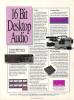
Werbung (US)
1992-11
Werbung (DE)
1993-06
Werbung (US)
1993-07
Hersteller MicroSearch / Sunrize Industries, USA | Datum 1989 | Amiga jeder Amiga |
Nur englische Beschreibung vorhanden:
- colour splitter
- allows grabbing of colour images with monochrome digitisers
- manual or automatic operation
- splits colours automatically for Perfect Vision and DigiView
- composite input with loop (2× RCA)
- hue and saturation adjustment knobs
- external power supply

Gehäuse, Vorderseite

Gehäuse, Rückseite

Gehäuse geöffnet, Oberseite
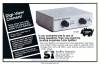
Werbung (US)
1989-08
Hersteller Sunrize Industries, USA | Datum 1993 | Amiga A2000, A3000, A4000 | Schnittstelle Zorro II | Autoconfig-ID 2127 / 3 |
- digitale Schnittstelle für AD516 und AD1012
- ermöglicht verlustloses digitales Speichern auf Digital Audio Tape und den Import von digitalen Daten direkt von CD oder DAT
- Anschluss: S/PDIF (Cinch), optional AES/EBU (XLR)
- Sample-Auflösung: 16 oder 24 Bit
- Sampling-Raten: 48 oder 44.1 kHz
- unterstützt von Studio 16
- Software für Festplatten-Backup
- die Karte erreichte nie den Markt
Hersteller Sunrize Industries, USA | Datum 1986,1987,1988 | Amiga jeder Amiga | Schnittstelle Parallel-Port |
- Sound Sampler
- kleiner externer Soundsampler
- Stereo-Sampling in 8 Bit
- zwei Cinch-Buchsen zum Anschluss einer Quelle mit Line-Pegel
- Audiowiedergabe und -bearbeitung über die mitgelieferte Software
- Software-Revisionen < v3.11 sind mit 020- und 030-Prozessoren inkompatibel
- Entwickler der Hardware und Software: Anthony J. Wood
- Installation in den Parallelport
- Perfect Sound I
- weisses Metallgehäuse
- Lautstärke- und Soundregler an der Gehäusevorderseite
- DB25-Buchse, Gehäuse wird aufrecht installiert
- nur für A1000 (funktioniert an anderen Amigas auch mit Gender-Changer nicht)
- Perfect Sound II
- weisses Metallgehäuse
- Anschluss an den Parallel-Port
- höhere Samplingraten (als Perfect Sound I) und integrierte Sample-and-Hold-Schaltung
- Perfect Sound III
- max. 40 kHz Samplingrate in Mono
- frühe Revisionen besitzen ein weisses Metallgehäuse, spätere Revisionen ein schwarzes Plastikgehäuse mit neuem Design
- zusätzlicher Mikrofoneingang (3.5 mm Klinkenbuchse) mit Vorverstärker
- kein Lautstärkeregler - die Lautstärke kann nur noch per Software gesteuert werden (Software anderer Hersteller, die dies nicht unterstützt, ist deshalb ausgeschlossen)
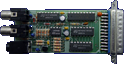
Perfect Sound III Platine, Vorderseite
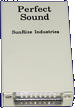
Perfect Sound III, Vorderseite
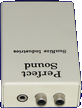
Perfect Sound III, Rückseite
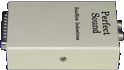
Perfect Sound III, rechte Seite
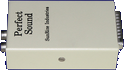
Perfect Sound III, linke Seite
- PerfectSound-30.dms
install disk v3.0
420 kB - PerfectSound-311.dms
install disk v3.11
406 kB
Werbung (US)
1987-01

Werbung (US)
1987-09
Werbung (FR)
1989-01
Werbung (US)
1989-12
Werbung (US)
1990-08
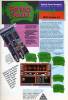
Werbung (DE)
1990-11
Werbung (US)
1991-05
Werbung (DE)
1991-10
Werbung (DE)
1991-12
Werbung (US)
1991-12
Hersteller Sunrize Industries, USA | Datum 1988 | Amiga jeder Amiga | Schnittstelle Parallel-Port |
Nur englische Beschreibung vorhanden:
- framegrabber
- grabs 320×200 or 320×400 images with 16 gray scales
- grabs the entire image in one video frame time (1/60th seconds non-interlaced, 1/30th seconds interlaced) so it can digitize a moving source without smearing
- stores the frame in its own 64 kB memory
- it takes about half a second to send the image to the Amiga through the parallel port
- can grab colour images with a colour wheel or the Sunrize Color Splitter
- saves images with 16 gray shades, 32 or 4096 (HAM) colours
- produces lower quality colour images than DigiView
- composite video input (RCA connector)
- brightness and contrast knobs
- external power supply

Vorderseite

Rückseite
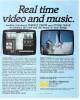
Werbung (US)
1987-12
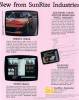
Werbung (US)
1988-08
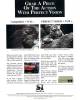
Werbung (US)
1988-12
Hersteller Sunrize Industries, USA | Datum 1994 | Amiga A2000, A3000, A4000 | Schnittstelle speziell (siehe Text), Floppy-Port |
Nur englische Beschreibung vorhanden:
- audio mixer
- synchronises Video Toaster with audio and can be used as a traditional audio mixer
- external unit, connects to the external floppy port
- four stereo inputs
- one stereo output
- auto detects balanced (+4) and unbalanced (-10 or line level) signals
- 1/4" Phone jacks for inputs and outputs - equipments providing balanced signal through 3 pin XLR connectors require an XLR to stereo phone adapter
- audio sources for the SoundSwitch and video sources for the Toaster have to be matched (e.g. if a VTR video output is connected to Toaster's video input #2 then the VTR audio output should be connected to input #2 on the SoundSwitch)
- PIC microprocessor handles volume control
- >95 dB dynamic range