 Amiga Hardware Database
Search Result
37 expansions found
Manufacturer Computer System Associates, USA | Date 1991 | Amiga A2000 | Interface CPU slot | Autoconfig ID 1058 / 17 |
- processor
- 68040 @ 25 / 33 MHz
- memory
- four 72 pin SIMM sockets accept 64 MB RAM
- supports 4 or 16 MB SIMMs (1M×32 resp. 4M×32)
- SIMM sizes can be mixed
- 1 MB burstable static RAM, soldered to the board
- 32 bit feature connector for extra memory board adding up to 128 MB RAM
- supports normal, page and burst modes
- Fast SCSI 2 controller
- NCR 53C710 controller IC
- 50 pin internal header
- DB25 external connector
- socketed resistors for SCSI termination
- LED bank indicate SCSI bus activity
- supported by NetBSD and OpenBSD
- I/O
- one DB25 RS422 compatible parallel port - plus one optional
- one DB9 RS232 compatible serial port - plus two optional
- notes
- LED bank indicate system bus activity
- programmable EPROM
- 68000 fallback mode, selectable by jumper or software
- pressing left mouse button during startup disables autoboot
- Autoboot disable switch at slot cover
- the board's autoconfiguration can be disabled by jumper
- 40_4_Magnum.pdf
user manual
146 kB
- 40_4_Magnum.dms
install disk
csascsi.device v38.76 (8 Sep 1992), csaser.device v1.52 (8 Jan 1992), csaprint.device v1.0 (28 May 92)
311 kB
Advert (AU)
1992-08
Manufacturer Commodore, USA | Date 1986 | Amiga A2000 | Interface CPU slot |
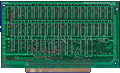
- the built-in Fast RAM card of the A2000-A (which has only 512 kB Chip RAM on its motherboard)
- 512 kB RAM soldered on board (16 DIPs), 150 ns
- 16 additional DIP sockets accept another 512 kB RAM for 1 MB total
- accepts 256k×1 DIPs only
- maprom function
- possible configurations:
- 512 kB system RAM
- Kickstart RAM
- 1 MB system RAM
- Kickstart RAM + 512 kB system RAM
- connects to the CPU slot
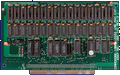
front side
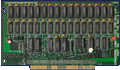
front side
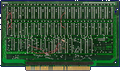
back side
back side
Manufacturer Commodore, USA | Date 1988 | Amiga A2000 | Interface CPU slot | Autoconfig ID 514 / 80 |
- processor
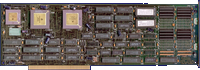
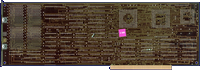
- 68020 @ 14 MHz, synchronous with the motherboard
- 68851 memory management unit
- factory installed 68881 @ 14 MHz, supports FPUs up to 68882 @ 25 MHz
- can be upgraded to 68030 with the Harms Professinal-Pack 030 board
- memory
- 2 or 4 MB 32 bit RAM
- 16 or 32 256k×4 page mode ZIPs 80-100 ns
- not expandable
- RAM can be disabled or autoconfigured by setting a jumper
- notes
- the first accelerator board for the A2000
- boot ROMs below rev 6 are incompatible with Kickstart 2.0 and above
- the ROM address space overlaps the upper 256 kB of the 512 kB Kickstart ROMs (Kickstart 1.3 is 256 kB only)
- by the time AmigaOS loads, the boot ROMs are supposed to be off but due to a bug in the A26x0 ROM code they remain active, causing an address space collision
- fitting a rev 6 or 7 ROM pair solves the problem
- some boards are reported being incompatible with the newer ROMs either
- in 68000 fallback mode the RAM is still available
front side
back side
- A2620_A2630_Addendum.pdf
Addendum to A2630 User's Guide and A2620 Installation Guide (english)
15 kB
- A2620_A2630_ROM_v04.zip
ROM Images Rev. 04 (Kickstart ≤ 1.3)
18 kB - A2620_A2630_ROM_v07.zip
ROM Images Rev. 07
19 kB
Manufacturer Commodore, USA | Date 1989 | Amiga A2000 | Interface CPU slot | Autoconfig ID 514 / 81 |
- processor
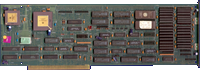
- 68030 @ 25 MHz, PGA
- 68882 @ 25 MHz, PGA
- can be upgraded to 50 MHz with CSA's Rocket Launcher
- memory
- 2 or 4 MB RAM on board
- capable of DMA, but does not support burst mode
- 16 or 32 256k×4 page mode ZIPs 80-100 ns
- expansion slot for third party RAM boards
- RAM can be disabled or autoconfigured by setting a jumper
- notes
- jumper selects whether autoboot into AmigaDOS or UNIX
- boot ROMs below rev 6 are incompatible with Kickstart 2.0 and above
- the ROM address space overlaps the upper 256 kB of the 512 kB Kickstart ROMs (Kickstart 1.3 is 256 kB only)
- by the time AmigaOS loads, the boot ROMs are supposed to be off but due to a bug in the A26x0 ROM code they remain active, causing an address space collision
- fitting a rev 6 or 7 ROM pair solves the problem
- in 68000 fallback mode the RAM is still available
- jumper settings
- rev 6
- rev 9
| J301 - | RAM size: ON - 2 MB, OFF - 4 MB |
| J302 - | B2000: ON - german A2000 |
| J303 - | RAM autoconfig: ON - disabled |
| J304 - | OS: ON - UNIX, OFF - AmigaOS |
| J202 - | FPU clock: ON - same as CPU clock |
| J200 - | reserved |
| J202 - | FPU clock: 1-2 - same as CPU clock, 2-3 - from oscillator U203 |
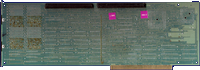
Rev 6, front side
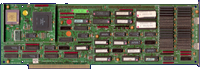
Rev 6, back side
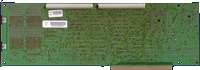
Rev 9, front side
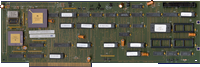
Rev 9, back side
- A2620_A2630_Addendum.pdf
Addendum to A2630 User's Guide and A2620 Installation Guide (english)
15 kB - A2630.pdf
User's Guide (english)
2.1 MB - A2630_R2B2-Umbauanleitung.pdf
Umbau einer A2630 Turbokarte auf 28 bzw. 30 MHz (german)
41 kB
- A2620_A2630_ROM_v04.zip
ROM Images Rev. 04 (Kickstart ≤ 1.3)
18 kB - A2620_A2630_ROM_v07.zip
ROM Images Rev. 07
19 kB
Manufacturer Great Valley Products, USA | Date 1989 | Amiga A2000 | Interface CPU slot | Autoconfig ID 2017 / 8,9,13 |
- processor
- 68030 @ 16 / 25 / 28 / 33 / 50 MHz, PGA
- optional 68882 @ 16 - 50 MHz, PGA - can be clocked at different speed than the CPU
- optional memory daughterboards
- 68030-RAM8:
- eight 30 pin SIMM sockets accept 4 or 8 MB RAM
- supports only special 1 MB Nibble Mode SIMMs, they are more expensive than GVP SIMMs
- accepts SIMMs in groups of four
- 68030-RAM32: (from 1991)
- eight 64 pin SIMM sockets accept up to 8 or 20 MB RAM
- supports only special 1 or 4 MB, 60 ns GVP SIMMs
- 60 ns SIMMs are required for 50 MHz, 70 ns for 33 MHz, 80 ns for 25 MHz
- 16 - 33 MHz boards support 1 MB SIMMs only, possible configurations are 2, 4 and 8 MB
- 50 MHz boards support 4 MB SIMMs, possible configurations are 4, 8, 12, 16 and 20 MB
- using a 4 MB SIMM requires four 1 MB SIMMs to be installed in sockets 3 to 6, so the 4 MB SIMMs can only be installed into sockets 7 to 10
- optional IDE controller
- two autoboot ROM sockets
- to activate the IDE controller only the boot EPROM(s) (gvpat.device) has to be installed on the main board - the first version of the driver software required two EPROMs, later ones required only one
- does not support drives that has more than 1024 cylinders
- controller uses byte-swapped storaging, so the HDD will be unreadable on other controllers without that feature
- 40 pin internal IDE header
- A-Max II driver (gvpat.amhd) - requires gvpat.device v2.4 and A-Max v2.06
- notes
- autobooting requires at least Kickstart 1.3 - the autoboot ROM should not be installed with Kickstart 1.2
- two ROM sockets for UNIX boot ROMs that require an A2090A SCSI controller - these ROMs are compatible with those on the A2630
- 68000 fallback mode selectable by jumper
- the memory and IDE controller is also deactivated in fallback mode
- jumper settings - A3001
| Jumper | Default | Description |
|---|---|---|
| J4 | OPEN | Install to clock FPU from oscillator U2 |
| J5 | SHORTED | Remove to disconnect FPU from oscillator U1 |
| J6 | OPEN | Install to disable the 68030’s caches |
| J7 | OPEN | Install to disable the 68030’s MMU |
| J8 | OPEN | Install to enable Unix boot register |
| J9 | SHORTED | Remove to enable 68030 boot EPROMs |
| J10 | SHORTED | Remove for use in German 4-layer A2000’s |
| J11 | OPEN | Install to boot in 68000 mode |
| J12 | OPEN | Reserved |
| J13 | OPEN | Reserved |
| J14 | SHORTED | Reserved |
| J15 | OPEN | Reserved (AT interface) |
| J16 | SHORTED | Reserved (AT interface) |
- jumper settings - RAM8 board
| Jumper | Default | Description |
|---|---|---|
| J1 | OPEN | Reserved |
| J2 | OPEN | Reserved |
| J3 | SHORTED | Reserved |
| J4 | SHORTED | Reserved |
| J5 | SHORTED | Remove to enable full 8MB of 32-bit RAM |
| J6 | SHORTED | Reserved |
| J7 | OPEN | Reserved |
Series I, front side
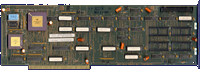
Series I, front side
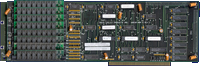
Series I with RAM8 board, back side
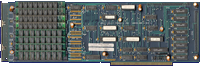
Series I with RAM8 board, back side
- A3001.dms
install disk (01.11.89)
320 kB - amiga.html#gvp
Ralph Babel
UNIX boot ROM image
1 kB - amiga.html#gvp
Ralph Babel
IDE ROM image
gvpat.device v4.1
10 kB
Advert (DE)
1989-10
Advert (DE)
1990-01
Advert (DE)
1990-05
Advert (DE)
1990-06
Advert (US)
1989-06
Advert (FR)
1989-09
Advert (US)
1989-09
Advert (FR)
1989-12
Advert (US)
1989-12
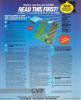
Advert (US)
1990-01
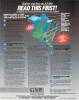
Advert (US)
1990-03
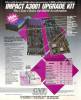
Advert (US)
1990-04
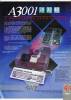
Advert (FR)
1990-05
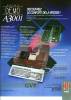
Advert (FR)
1990-06
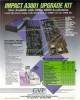
Advert (US)
1990-07
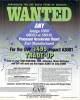
Advert (US)
1990-08
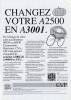
Advert (FR)
1990-09
Advert (FR)
1990-11
Advert (US)
1990-12
Advert (FR)
1990-12
Advert (US)
1991-04
Manufacturer Great Valley Products, USA | Date 1991 | Amiga A2000 | Interface CPU slot | Autoconfig ID 2017 / 8,9,13 |
- processor
- 68030 @ 33 / 50 MHz, PGA
- 68882 @ 33 / 50 MHz, PGA - clocked separately from the CPU
- memory daughterboard (68030-RAM32)
- eight 64 pin SIMM sockets accept up to 8 or 20 MB RAM
- supports only special 1 or 4 MB, 60 ns GVP SIMMs
- 60 ns SIMMs are required for 50 MHz, 70 ns for 33 MHz, 80 ns for 25 MHz
- 16 - 33 MHz boards support 1 MB SIMMs only, possible configurations are 2, 4 and 8 MB
- 50 MHz boards support 4 MB SIMMs, possible configurations are 4, 8, 12, 16 and 20 MB
- using a 4 MB SIMM requires four 1 MB SIMMs to be installed in sockets 3 to 6, so the 4 MB SIMMs can only be installed into sockets 7 to 10
- IDE controller
- autoboot ROM (gvpat.device)
- does not support drives that has more than 1024 cylinders
- autobooting requires at least Kickstart 1.3 - the autoboot ROM should be removed with Kickstart 1.2
- controller uses byte-swapped storaging, so the HDD will be unreadable on other controllers without that feature
- 40 pin internal IDE header
- A-Max II driver (gvpat.amhd) - requires gvpat.device v2.4 and A-Max v2.06
- jumper settings
- main board (rev 7):
J4
ON
OFFJ5
OFF
ON- FPU clock
- from oscillator U2
- from oscillator U1J10
ON
OFFJ12
ON
OFFJ13
ON
OFFJ14
OFF
ON- clocking mode
- A2000-A german motherboard, 68000 must be removed
- A2000-B motherboardJ6 - MMU: ON - disable J7 - CPU clock: OFF - 50 MHz, ON - lower J9 - 68030 Boot code EPROMS (U23 and U25): OFF - enable J11 - 68000 fallback mode: ON - enable J15 - IDE autoboot EPROM (U34): ON - enable J17 - IDE autoboot EPROM type: ON - 27256, OFF - 27128 J18 - IDE drive: OFF - connected (with autoboot EPROM v3 or later) J1, J16
ONJ2
OFF
- reserved - memory board (rev 3):
J3
OFF
ONCN11
OFF
2-3CN13
ON
OFF
- 50 MHz
- lower clockJ5
ON
OFF- memory address of CN7-CN10 SIMMs
- Zorro II address space (with 1 MB SIMMs only)
- 0x01000000 (with 4 MB SIMMs only)J1, J4, J6, J8
ONJ2, J11
OFFCN12
1-2
- reserved
- notes
- two ROM sockets for UNIX boot ROMs that require an A2090A SCSI controller - these ROMs are compatible with those on the A2630
- the memory and IDE controller is also deactivated in 68000 fallback mode
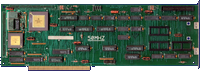
Series II, front side
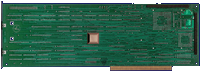
Series II, back side
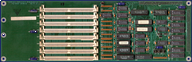
RAM32 board, front side
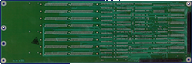
RAM32 board, back side
- amiga.html#gvp
Ralph Babel
UNIX boot ROM image
1 kB - amiga.html#gvp
Ralph Babel
IDE ROM image
gvpat.device v4.1
10 kB
Advert (US)
1991-05
Manufacturer Data & Electronics / GameWorks, Netherlands | Date 1991 | Amiga A500, A500+A2000 | - - | Interface side expansion portCPU slot, Zorro II |
- freezer
- successor of the X-Power freezer module
- A500 / A500+ versions:
- plugs into the side expansion port
- 2 LEDs, indicating speed (green/yellow) and enabled freeze mode (red)
- LC version:
- naked board (no case)
- no slow motion controller
- no X-Copy in ROM
- LCX version:
- like LC version, with X-Copy in ROM
- Professional version:
- features a case, slow motion controller and X-Copy in ROM
- A2000 versions:
- Zorro version:
- plugs into Zorro slot
- features only 86 pins, so it has to be plugged in on the right side of the slot
- CPU slot version:
- plugs into 86 pin CPU slot
- two connectors for slow motion controller and freeze button
- not compatible with bridge boards
- freezer features:
- trainer maker (with automatic find option)
- save computer memory (freezed programs) to disk
- machine monitor / disassembler
- disk / file utilities: Dir, Path, MkDir, Rename, Erase, Install, Format, FileCopy, DiskCopy
- picture / music (tracker) / sample ripper
- sprite editor
- slow motion controller (only Professional version)
- slide show generator for IFF images
- joystick autofire
- disk monitor
- shows computer status (disk parameters, ChipRAM, FastRAM...)
- detects non-standard boot blocks (virus test)
- joystick test
- includes X-Copy disk copier in ROM (only LCX and Professional versions)
- color and screen mode adjust
- screen hardcopy
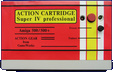
Professional version for A500, top side
- ActionCartridgeSuperIV.txt
Bedienungsanleitung / german user manual
148 kB
- ActionCartridgeSuperIV.dms
Manual and Boot Disk
167 kB
Manufacturer Datel Electronics, UK | Date 1991 | Amiga A1000, A500A2000 | - - | Interface side expansion portCPU slot |
- Freezer
- 128 KB Operating System ROM
- same features as ActionReplay Mk I v1.5, plus the following new features:
- boot selector
- picture editor
- sound tracker
- turbo fire manager (separately for both joysticks)
- disk encoder
- start menu
- disk monitor
- integrated DOS commands (Dir, Format,...)
- Diskcopy
- 80 characters display with two-way scrolling
- calculator
- notepad
- memory and drive switch (enabling / disabling)
- music ripper now finds all tracker formats (SoundTracker, NoiseTracker, other formats with 32 samples)
- ripped music / pictures are saved in IFF format
- A500 / A1000 version:
- plugs into the side expansion port
- no passthrough connector
- A2000 version:
- connects to the 86 pin CPU slot
- half length card
- uses the common AmigaDOS disk format for saving
- disable switch
- Notes
- does not support hard disks
- does not work with processor cards
- not compatible with Kickstart 2.0 and above
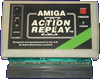
Mk II, A500 version, front side
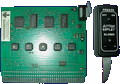
Mk II, A2000 version, front side
- ActionReplayMk2.pdf
Instruction Manual (german)
225 kB - ActionReplayMk2_Eng.pdf
Instruction Manual (german)
3.0 MB - ActionReplayMk2_A2000_Note.pdf
A2000 Installation Note (english)
163 kB
Advert Mk II (US)
1990-12
Advert (US)
1991-07
Advert Part 1 (GB)
1990-12
Advert Part 2 (GB)
1990-12
Advert (GB)
1991-05
Advert (GB)
1991-07
Advert (DE)
1990-12
Advert (DE)
1991-01
Advert (DE)
1991-01
Advert (DE)
1991-10
Advert (DE)
1991-10
Manufacturer Datel Electronics, UK | Date 1992 | Amiga A500A2000 | - - | Interface side expansion portCPU slot |
- Freezer
- 256 kB Operating System ROM
- same features as ActionReplay Mk II, plus the following new features:
- deep trainer
- burst nibbler copy program
- switch between PAL and NTSC (with new Agnus)
- joystick handler (use the joystick instead of keyboard)
- setmap
- file requester
- better support of RAM expansions
- more CLI programs
- A500 version:
- plugs into the side expansion port
- no passthrough connector
- A2000 version:
- connects to the 86 pin CPU slot
- half length card
- uses the common AmigaDOS disk format for saving
- disable switch
- Notes
- does not support hard disks
- does not work with processor cards
- not compatible with Kickstart 2.0 and above
- in A1000, the module has to be disabled before loading the Kickstart
- does not work with 3-State's Multivision 500 and Multivision 2000
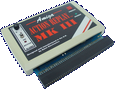
Mk III, A500 version, front side
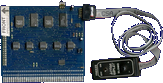
Mk III, A2000 version, front side

Mk III, A2000 version, front side
- ActionReplayMk3.pdf
Action Replay Mk3 Instruction Manual
708 kB
Advert (DE)
1992-01
Advert (DE)
1992-01
Advert (DE)
1992-05
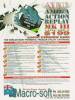
Advert (AU)
1991-12
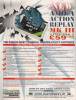
Advert (GB)
1992-01
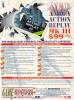
Advert (US)
1992-03
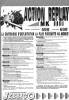
Advert (FR)
1992-07
Manufacturer Harms Computertechnik, Germany | Date 1989 | Amiga A2000 | Interface CPU slot |
- processor
- 68020 @ 14 / 16 MHz, PGA
- optional PGA FPU 14 - 33 MHz
- memory
- eight DIP sockets accept 128 kB - 1 MB 32 bit static RAM
- notes
- plugs into the CPU slot
- the 68000 has to be removed from the motherboard - fallback to 68000 mode is not possible
- 32 bit feature connector for optional RAM expansion or Multifunction card
Advert (DE)
1989-05
Advert (DE)
1990-03
Manufacturer ACT Elektronik, Germany | Date 1991 | Amiga A2000 | Interface CPU slot | Autoconfig ID 8738 / 35 |
- processor
- 68030 @ 25 / 28 / 50 MHz QFP, PLCC or PGA
- 68882 @ 25 / 28 / 50 MHz PLCC or PGA
- memory
- two 72 pin SIMM sockets accept 64 MB RAM
- supports 1, 2, 4, 8, 16, 32 MB SIMMs
- 60 ns SIMMs are required for the 50 MHz version
- accepts FastPage and EDO RAM
- SIMM sizes can be mixed
- burst RAM access
- memory disable switch
- SCSI 2
- non-DMA SCSI controller
- autoboot ROM (SCSI-Apollo.device)
- supports the RDB standard
- optional external SCSI connector
- a 3.5" hard disk can be mounted on the card
- SCSI disable switch
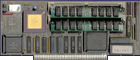
front side
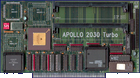
front side
back side
- Apollo2030.pdf
Wichtige Hinweise
8 kB
- apollo.2030hdinstall.DMS
Installer's Heaven
install disk
197 kB
Manufacturer Solid State Leisure, UK | Date 1992 | Amiga A2000 | Interface CPU slot |
- processor
- 68030 @ 25 or 68EC030 @ 40 MHz, PGA
- optional 68882 @ 25 - 50 MHz, PGA
- memory
- eight 30 pin SIMM sockets
- 4 MB RAM installed, expandable to 32 MB
- supports 1 or 4 MB, 70 ns SIMMs
- accepts SIMMs in groups of four giving 4, 8, 16, 20 or 32 MB RAM
- non-autoconfiguring
- burst RAM access
- hardware maprom
- notes
- does not support DMA to its 32 bit RAM - DMAfix solves this
- after a reboot, DMA into Zorro II memory larger than 512 bytes causes the machine to hang, this affects the A2091 but not the GVP Series II - DMAfix helps here too
- 68000 fallback mode - the software can switch from 68030 to 68000 but cannot switch back, the machine has to be switched off
- memory is not available in fallback mode
Manufacturer Phase 5 Digital Products, Germany | Date 1996 | Amiga A2000 | Interface CPU slot | Autoconfig ID 8512 / 24 |
- processor
- 68040 @ 40 MHz / 68060 @ 50 MHz
- the 68040s are recycled from used Macs
- memory
- four 72 pin SIMM sockets accept 128 MB RAM
- supports 4, 8, 16, 32 MB SIMMs, 70 ns or faster
- fully autoconfiguring
- maprom selectable by jumper
- Fast SCSI 2 DMA controller
- 7 MB/s asynchronous, 10 MB/s synchronous transfer speed
- 50 pin internal header
- 50 pin external connector
- supported by Linux, NetBSD and OpenBSD
- notes
- 68000 fallback mode selectable with a simple keystroke at startup - works only with rev. B A2000s
- Blizzard 2040 ERC boards with SN# A400001 - A400094 were delivered with a defective DiagROM
- the 68040 processor is recognized as 68LC040 or 68EC040
- boards with these serial numbers had to be sent back to Phase5 to obtain a new DiagROM set including a new SCSI driver
front side
back side
front side
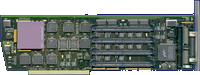
front side
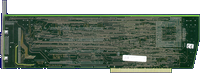
back side
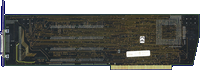
back side
- Blizzard2060-de.pdf
user manual (DCE, german)
158 kB - Blizzard2060.pdf
DCE
user manual (DCE, english)
160 kB
- P5-SCSI-Tools-13.dms
SCSI tool disk v1.3
(for driver versions before v7.x)
425 kB - P5-SCSI-Tools-20.lha
SCSI tool disk v2.0
222 kB - P5-SCSI-Tools-21.dms
SCSI tool disk v2.1
287 kB - P5-SCSI-Tools-22.dms
SCSI tool disk v2.2
520 kB - P5-SCSI-Tools-24.dms
SCSI tool disk v2.4
520 kB - P5-SystemDisk-421.dms
install disk v2.0
68060.library v42.1 (14.10.1997), ppc.library v44.29Beta
297 kB - P5-SystemDisk-431.dms
install disk v2.0
68060.library v43.1 (05.02.1998), ppc.library 45.17Beta
353 kB
Advert (DE)
1995-08
Advert (DE)
1996-05
Advert (DE)
1996-09
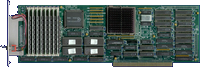
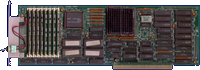
Manufacturer RCS Management, Canada | Date 1991 | Amiga A2000 | Interface CPU slot |
- processor
- 68040 @ 25 / 28 / 35 MHz
- the latter two versions are overclocked from 25 / 33 MHz
- memory - 25 and 28 MHz versions
- eight 30 pin SIMM sockets accept up to 32 MB
- supports 1 or 4 MB SIMMs, 80 ns or faster
- accepts SIMMs in groups of four giving 4, 8, 16, 20, 32 MB RAM
- memory - 35 MHz version
- eight 30 pin SIMM sockets accept up to 128 MB
- supports 1, 4 or 16 MB SIMMs, 80 ns or faster
- accepts SIMMs in groups of eight
- 64 bit interleaved memory system
- supports burst RAM access
- incompatibilities under Kickstart 1.3
- doesn't work with Commodore A2090a, Microbotics Hardframe and M.A.S.T. Fireball
- needs the latest ROMs of Supra Series III and AdSCSI in order to work with them
- needs rev. 6.6 ROMs of A2091 and rev. 3.12 ROMs of GVP Series II in order to work with them
- doesn't work with the 16 bit RAM on IVS Grandslam - only the SCSI part of Grandslam works
- incompatibilities under Kickstart 2.0
- doesn't work with A2090, A2090a and Fireball
- doesn't work with the Piccolo graphics card
- notes
- disable switch - 68000 fallback mode
- two 32 bit expansion connectors - intended for a never released SCSI controller
- Kickstart 3.x is supported only by upgrading to version 3.4 of the Plug-n-Go ROMs
- the first 68040 board for the Amiga
Rev 2.0, front side
Rev 2.0, front side
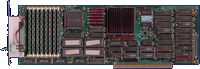
Rev 1.0, front side
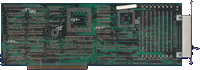
Rev 1.0, back side
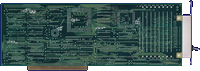
Rev 2.0, back side
- FusionForty-30-139.dms
install disk v3.0
Software Release v3.0, FFCache v1.1, SetFF v1.39
225 kB - FusionForty-30-150.dms
install disk including on-disk manual
Software Release v3.0, SetFF v1.50
127 kB - FusionForty_Tools-137.dms
tool disk with SetFF v1.37, FFCache v0.96 and AIBB v4.5
213 kB - PnG34dsk.DMS
www.lundblad.net
install disk v3.4
242 kB - SetFF179.lha
www.lundblad.net
SetFF v1.79
29 kB
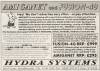
Advert (GB)
1993-04
Advert (US)
1990-07
Advert (US)
1991-11
Advert (US)
1993-02
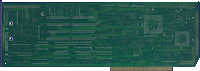
Manufacturer Great Valley Products, USA | Date 1992 | Amiga A2000 | Interface CPU slot | Autoconfig ID 2017 / 11 |
- processor
- 68EC030 @ 25 / 40 MHz or 68030 @ 50 MHz, PGA
- 68882 @ 25 / 40 / 50 MHz, PGA - clocked at the same speed as the 68030
- memory
- 25 MHz: 1 MB on board + three SIMM sockets gives 13 MB max
- 40 / 50 MHz: 4 MB on board + three SIMM sockets gives 16 MB max
- supports only special 64 pin 1 or 4 MB 60 ns GVP SIMMs
- maximum 8 MB is autoconfigured in the 16 MB address space, the exact amount is set by jumper
- the remaining memory is configured as extended memory by the FaaastROM driver
- Impact Series II SCSI controller
- 1.2 MB/s transfer speed
- direct DMA transfer to onboard Fast RAM
- FaaastROM SCSI driver (gvpscsi.device) - auto booting requires at least Kickstart 1.3
- DB25 external connector
- 50 pin internal header
- supported by Linux and NetBSD
- optional hard disk mounting kit allows installing any 1" drive on the back of the card
- notes
- 32 bit expansion bus for the EGS 110/24 graphics board
- if the EGS 110/24 is installed no place remains for the hard disk mounting kit
- 68000 fallback mode switchable either by software or jumper
- in 68000 fallback mode RAM and SCSI is also switched off
- Kickstart remapping
- jumper settings
- rev 3
J5
ON
OFF
ONJ6
OFF
ON
ONJ11
OFF
ON
OFFCN8
2-3
OFF
1-2- board type
- 25 MHz
- 40 MHz
- 50 MHzJ2 - 68000 fallback mode: OFF - enable J3 - MMU: ON - disable J9 - autoboot ROM: OFF - disable J12 - bank 1-2 memory address: ON - Zorro II address space, OFF - 0x01000000 J14 - SCSI drive: OFF - connected CN6 - HDD LED CN16 - FPU clock: 2-3 - uses CPU clock J4
ONJ7, J8, J10, J13, J15
OFFCN7, CN15
1-2CN14
2-3
- reserved - rev 4 (additional jumpers to rev 3)
J16 - DTACK pull-up for old A2000s: ON - enable CN15 - autoboot ROM version: 1-2 - v4.5; 2-3 - before v4.5 CN17
2-3
1-2-3
- 25 MHz, 50 MHz
- 40 MHz
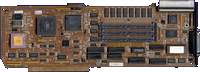
Rev 3, front side
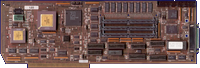
Rev 3, front side
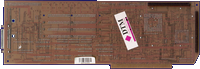
Rev 3, back side
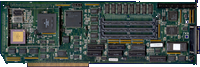
Rev 4, front side
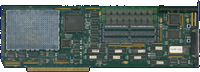
Rev 4, front side
Rev 4, back side
- GForce2030-920914.dms
install disk (14.9.92)
gvpscsi.device v4.5
207 kB - GForce2030-921002.dms
install disk (2.10.92)
gvpscsi.device v4.13
406 kB - GForce2030.dms
install disk (13.9.90)
gvpscsi.device v3.7
343 kB - amiga.html#gvp
Ralph Babel
SCSI ROM image
gvpscsi.device v4.15
16 kB - combo030.dms
GVP-M
install disk
379 kB
Advert (DE)
1991-06
Advert (DE)
1992-10
Advert (DE)
1993-02
Advert (US)
1998-05
Advert (US)
1992-02
Advert (US)
1992-03
Advert (FR)
1992-05
Advert (US)
1992-09
Advert (US)
1993-06
Advert (US)
1993-11
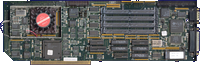
Manufacturer Great Valley Products, USA | Date 1992 | Amiga A2000 | Interface CPU slot | Autoconfig ID 2017 / 11,255 |
- processor
- 68040 @ 33 MHz
- memory
- four 64 pin SIMM sockets accept 64 MB RAM
- supports only special 4 or 16 MB GVP SIMMs
- SIMM sizes cannot be mixed
- 040 burst mode requires all four sockets to be filled up
- Kickstart remapping
- SCSI 2 DMA controller
- not Fast SCSI 2 - the same electronic as the GVP Series II controllers
- no termination power is fed to the external SCSI connector - active termination must be used
- 50 pin internal SCSI header
- DB25 external connector
- RDB compatible
- supported by Linux and NetBSD
- I/O
- RS232 compatible 9 pin buffered serial port
- 614140 bps max transfer speed
- Centronics parallel port
- selectable IBM / Amiga compatible mode
- notes
- 32 bit expansion bus for the EGS 110/24 graphics board
- jumper settings
| J4 - | SCSI drive: OFF - connected |
| J5 - | autoboot ROM: OFF - disable |
| J7 - | MMU: ON - disable |
| J20 - | SIMM size: ON - 4 MB, OFF - 16 MB |
| J22 - | burst mode: OFF - enable |
| J26 - | DTACK pull-up for old A2000s: ON - enable |
| CN9 - | parallel port mode: 1-2 - Amiga, 2-3 - IBM |
| J10, J16, J21, J24, J27 ON | J2, J3, J8, J15, J17, J18, J19, CN19 OFF | CN12, CN20 1-2 | CN11 2-3 | - reserved |
front side
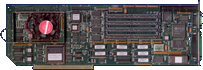
front side
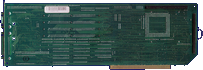
back side
- GForce2040-140.dms
install disk v1.40 (18.2.93)
410 kB - GForce2040.bin
ROM image (1994)
32 kB - amiga.html#gvp
Ralph Babel
SCSI ROM image
gvpscsi.device v4.15
16 kB - combo040.dms
GVP-M
install disk v1.51
415 kB
Advert (DE)
1993-02
Advert (US)
1992-09
Advert (US)
1993-06
Advert (US)
1993-11
Advert (US)
1994-04
Manufacturer Kupke, Germany | Date 1991 | Amiga A2000 | Interface CPU slot | Autoconfig ID 2073 / 4 |
- processor
- 68030 @ 14 MHz, PGA (synchronous with the A2000)
- optional PGA FPU - it can either run at 14 MHz, or use a separate crystal up to 50 MHz
- memory
- 32 DIP sockets accept up to 16 MB RAM
- supports 256k×4 or 1M×4 DIPs
- accepts chips in groups of eight
- possible memory configurations are 1, 2, 3, 4, 5, 6, 7, 8, 9, 10, 12, 13 or 16 MB
- notes
- software switchable 68000 fallback mode (also disables the memory expansion)
- jumper settings
| Jumper | Default | Description |
| JP101 | - | FPU Oscillator: 1-2 - no oscillator present, 2-3 - oscillator present |
| JP201 | OFF | MMU Disable: ON - MMU disabled, OFF - MMU enabled |
| JP202 | OFF | CPU Cache Disable: ON - Cache disabled, OFF - Cache enabled |
| JP302 | ON | Cache Chip Memory: ON - caching disabled, OFF - caching enabled |
| JP303 | - | 1MBit/4MBit: ON - 1MBit, OFF - 4 MBit |
| JP304 | - | reserved |
| JP305 | - | reserved |
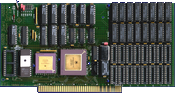
front side
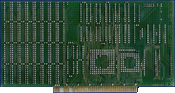
back side
- Golem030Turbo.pdf
Bedienungsanleitung
3.8 MB
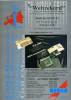
Advert (DE)
1991-10
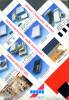
Advert (DE)
1992-02
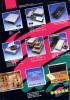
Advert (DE)
1992-04
Advert (DE)
1993-11
Advert (DE)
1991-05
Advert (DE)
1991-05
Advert (DE)
1991-06
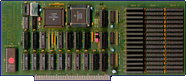
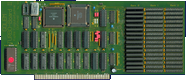
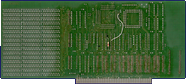
Manufacturer Kupke, Germany | Date 1992 | Amiga A2000 | Interface CPU slot | Autoconfig ID 2073 / 4 |
- processor
- 68030 @ 16 - 50 MHz, PLCC
- optional 68882 up to 50 MHz, PLCC - can be clocked either together with the CPU (one crystal) or independently (two crystals)
- memory
- 48 ZIP sockets accept up to 24 MB RAM
- supports 256k×4 or 1M×4 ZIPs
- accepts chips in groups of eight
- notes
- disable switch
Manufacturer Ronin Research and Development / IMtronics, USA | Date 1988 | Amiga A2000 | Interface CPU slot |
- processor
- 68020 @ 14 / 28 MHz, PGA (synchronous with the A2000)
- optional PGA FPU (asynchronous)
- optional memory board - H2-Memory
- 32 DIP sockets accept up to 16 MB RAM
- possible configurations are 1, 2, 3, 4 MB with 256k×4 DIPs or 4, 8, 12, 16 MB with 1M×4 DIPs
- DIPs must have at least 70 ns access time
- memory does not autoconfig, software is needed
- although the memory is mapped into the Zorro II memory space, it is not DMA-able
- rules out other memory expansions in A2000-A
- notes
- 68000 fallback mode
- older revisions needed the 68000 to be removed which made the fallback mode impossible
- the AddBuffers command in the Startup-Sequence may cause hard disk errors - the command has to be removed
- compatibility problems with Kickstart 2.0
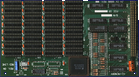
RAM board H2-Memory, front side
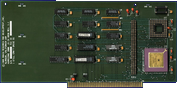
CPU board, front side
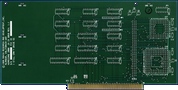
blank CPU card, front side
- Hurricane.lha
HurricaneSetup
HurricaneConfig v2.1
17 kB
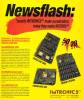
Advert (US)
1990-05
Advert (DE)
1990-02
Advert (DE)
1990-05
Advert (DE)
1990-05
Advert (US)
1988-10
Manufacturer Ronin Research and Development / IMtronics, USA | Date 1989 & 1990 | Amiga A2000 | Interface CPU slot | Autoconfig ID 1028 / 57,874136 / 57,87 |
- processor
- Hurricane 2800:
- 68030 @ 28 MHz (synchronous with the A2000), PGA
- optional 68882 up to 33 MHz (asynchronous), PGA
- Hurricane 2800 Mk2:
- 68030 @ 28 / 36 / 50 MHz (asynchronous), PGA
- optional 68882 @ 16 / 25 / 33 / 40 MHz (clocked asynchronous to 68030), PGA
- optional memory board - H2-Memory
- 32 DIP sockets accept up to 16 MB RAM
- possible configurations are 1, 2, 3, 4 MB with 256k×4 DIPs or 4, 8, 12, 16 MB with 1M×4 DIPs
- DIPs must have at least 70 ns access time
- does not support the burst mode of the 68030
- does not support DMA to its memory
- does not autoconfig, memory is configured by software at startup
- SCSI controller
- 50 pin internal header
- autoboot ROM
- does not support the RDB protocol
- notes
- 68000 fallback mode - can be activated with jumper P2
- the SCSI controller stays active and autoboots even in 68000 fallback mode
- a boot menu can be reached by holding the right mouse button during startup
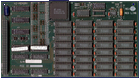
RAM board H2-Memory, front side
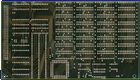
RAM board H2-Memory, back side
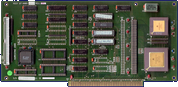
front side
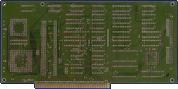
back side
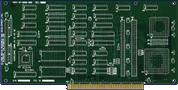
blank CPU card, front side
- Hurricane2800Mk2.pdf
User Manual (german) / Bedienungsanleitung
4.1 MB
- Hurricane.lha
HurricaneSetup
HurricaneConfig v2.1
17 kB

Advert (US)
1990-01
Advert (US)
1990-05
Advert (DE)
1989-10
Advert (DE)
1989-11
Advert (DE)
1990-02
Advert (DE)
1990-05
Advert (DE)
1990-05
Advert (DE)
1990-11
Advert (FR)
1991-01
Advert (US)
1988-10
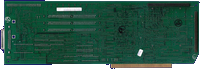
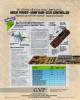
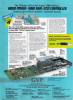
Manufacturer Great Valley Products, USA | Date 1991 | Amiga A2000 | Interface CPU slot | Autoconfig ID 2017 / 11 |
- processor
- 68030 @ 22 / 33 MHz, QFP
- 68882 @ 22 / 33 MHz, PLCC surface mounted
- the CPU and FPU are clocked at the same speed by the same oscillator
- memory
- 22 MHz: 1 MB preinstalled, expandable to 13 MB RAM
- 33 MHz: 4 MB preinstalled, expandable to 16 MB RAM
- three 64 pin SIMM sockets accept 1 or 4 MB GVP SIMMs
- Impact Series II SCSI controller
- WD33C93 controller IC
- direct DMA transfer to onboard Fast RAM
- FaaastROM SCSI driver (gvpscsi.device) - auto booting requires at least Kickstart 1.3
- DB25 external connector
- 50 pin internal header
- optional hard disk mounting kit allows installing any 1" drive on the back of the card
- jumper settings
| J10 ON OFF | J13 OFF ON | - memory address - outside Zorro II address space - Zorro II address space (with 1 MB SIMMs only) |
| J3 - | MMU: ON - disable |
| J4 - | SCSI drive: OFF - connected |
| J6 - | 68000 fallback mode: OFF - enable |
| J9 - | autoboot ROM: ON - disable |
| J7, J12, J15, J17, J18, J19, J22 ON | J8, J11, J14, J16, J20 OFF | J21, CN7, CN8 1-2 | - reserved |
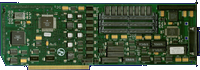
Rev 3, front side
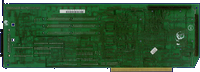
Rev 3, back side
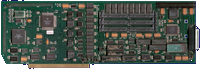
Rev 4, front side
Rev 4, back side
- amiga.html#gvp
Ralph Babel
SCSI ROM image
gvpscsi.device v4.15
16 kB - combo030.dms
GVP-M
install disk
379 kB
Advert (US)
1991-05
Advert (FR)
1991-06
Advert (US)
1991-09
Advert (FR)
1991-10
Advert (AU)
1991-08
Advert (FR)
1992-02
Manufacturer Winner's Circle Systems / Ronin Research and Development, USA | Date 1988 | Amiga A2000 | Interface CPU slot |
- CPU board adaptor
- allows A1000 processor boards to be used in the A2000
- just a bare 68000 socket on an A2000 style processor card
- works with almost all those A1000 cpu socket boards, for example the Ronin Hurricane
- too wide boards do not fit inside the A2000 case
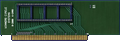
front side
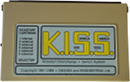
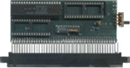
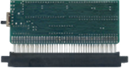
Manufacturer CBM Design / Gameworks, UK | Date 1991 | Amiga A500, A500+, A1000A2000 A2000 | - - - | Interface side expansion portZorro II CPU slot |
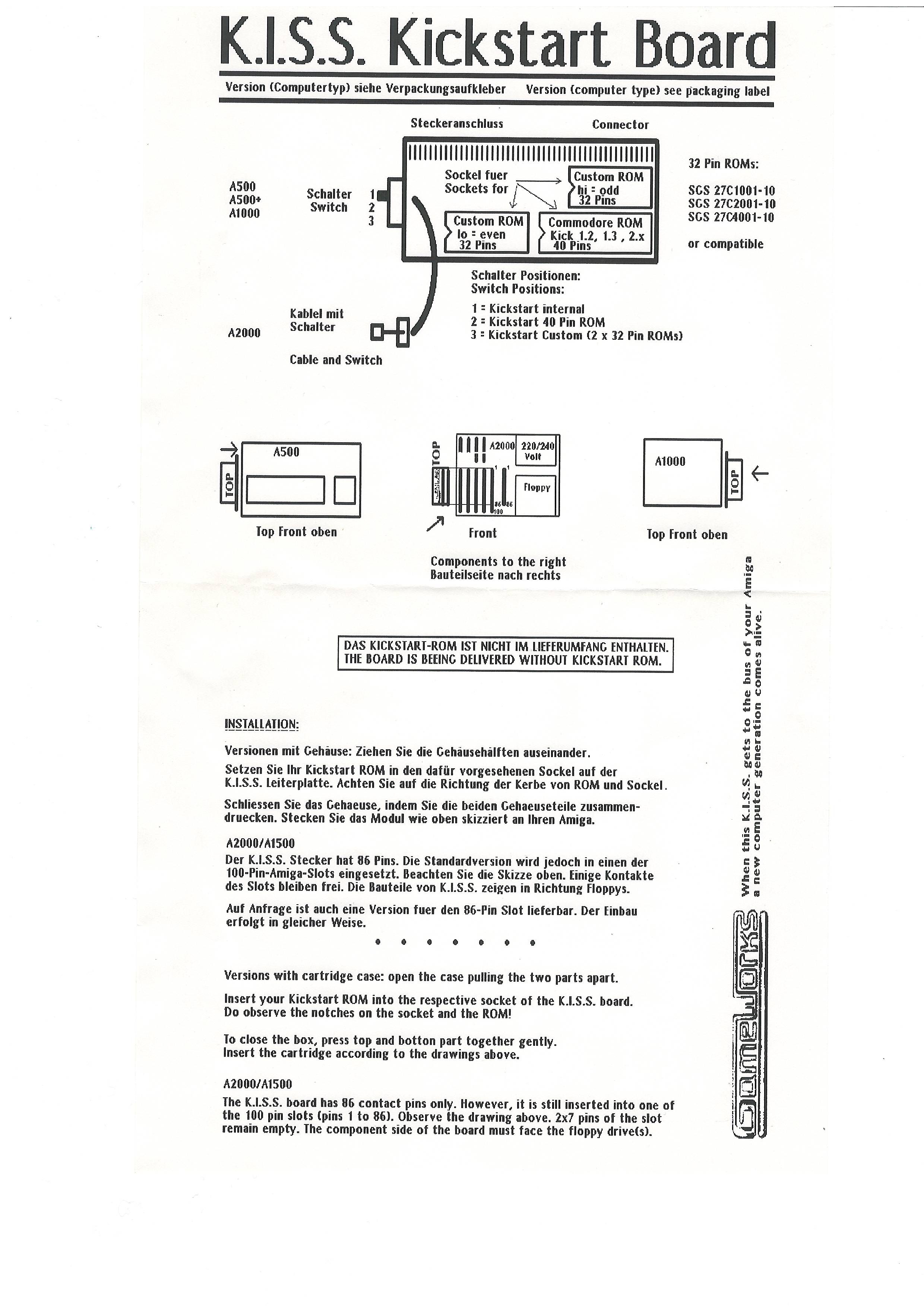
- Kickstart Switcher
- two 32 pin sockets for EPROM Kickstart and one 40 pin socket for an original ROM
- supports 32 pin EPROMs 27C1001, 27C2001, 27C4001 or compatible
- switch (external version) resp. jumper (internal version) allows switching between internal Kickstart, external ROM and external EPROM
- three different variants available:
- A500/A500+/A1000 external version with case, plugs into side expansion slot
- A2000 internal version for Zorro slot, to be installed into 100 pin Zorro slot despite having only 86 pins (installs towards rear side)
- A2000 internal version for CPU slot (special version upon request)
Manufacturer Kupke, Germany | Date 1989 | Amiga A500A2000 | - - | Interface side expansion portCPU slot |
- Kickstart Module and Switcher
- allows switching between two Kickstarts
- Kickstart 1: 1 socket for an original ROM
- Kickstart 2: 2 sockets for an EPROM based Kickstart
- jumpers to select between the Kickstarts
- expansion features both A500 side expansion and A2000 CPU connectors

front side

back side
Advert (DE)
1989-04
Manufacturer Roßmöller Handshake, Germany | Date 1990 | Amiga A2000 | Interface CPU slot |
- 68000 @ 14 MHz
- optional 68881 @ 14 MHz or more with separate oscillator
- 16 kB Cache RAM
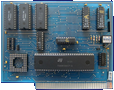
front side
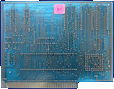
back side
Advert (DE)
1991-03
Manufacturer Data & Electronics, Netherlands | Date 1989 | Amiga A500, A1000A2000 | - - | Interface side expansion portCPU slot |
- freezer
- external version for A500/A1000 plugs into the side expansion port
- internal A2000 version plugs into CPU slot, controls are connected to ribbon cable and need to be mounted on the case
- freeze button and slow motion controller
- Nordic Power LC
- low cost version, various features are omitted
- features:
- save computer memory (freezed programs) to disk
- reset (with optional memory clear)
- picture / sample ripper
- disk copy
- basic DOS utilities (Dir, Path)
- shows computer status (disk parameters, ChipRAM, FastRAM...)
- Nordic Power SC / SP
- additional features present in the versions SC and SP:
- slow motion controller
- Screen Dump (Hardcopy)
- additional DOS utilities (MkDir, Erase)
- machine language monitor (disassembler)
- Notes
- incompatible with Bridgeboards
- LC / SC versions support only 512kB RAM and are incompatible with installed Big Agnus chip
- SP version supports 1 MB RAM
- freeze button is not debounced and may lead to incorrect operation
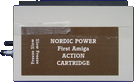
front side
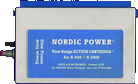
front side
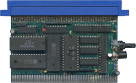
PCB, front side
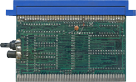
PCB, back side
- NordicPower.pdf
user manual (german)
6.9 MB
Advert (GB)
1990-07
Manufacturer Hardital, Italy | Date 1992 | Amiga A2000 | Interface CPU slot |
- processor board
- 68040 @ 25 / 30 MHz
- memory
- eight 30 pin SIMM sockets accept up to 32 MB RAM
- supports 1 or 4 MB SIMMs, 80 ns or faster
- accepts SIMMs in groups of four giving 4, 8, 16, 20, 32 MB RAM
- the memory does not autoconfig, it has to be added by software during startup
- notes
- if a Kickstart image is present in DEVS: the card boots the image instead of the installed ROM (Softkick)
- Kickstart image in DEVS: must be named »kickstart«
- the Kickstart image can be copied to the onboard EPROMs (2× 128 kB) for faster operation (Fastkick)
- when using Softkick, 040 copyback is disabled and expansion.library is located in Chip RAM, lowering performance - only certain board revisions are affected
- the installation software overwrites any existing 68040.library with its own v36.2
- disable switch on slot cover
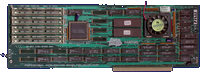
front side
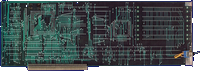
back side
- OverTheTop.pdf
Anleitung
20 kB
- OverTheTop.dms
install disk v2.0
309 kB

Advert (IT)
1992-10

Advert (IT)
1994-11

Advert (IT)
1995-10
Manufacturer Harms Computertechnik, Germany | Date 1991 | Amiga A2000 | Interface CPU slot | Autoconfig ID 2560 / 16 |
- processor
- Standard: 68030 @ 14.3 MHz PGA
- Plus: 68030 @ 28 MHz PGA
- optional PGA FPU up to 68882 @ 60 MHz
- memory
- sixteen ZIP sockets accept 1, 2, 4, 8 MB RAM
- supports 256k×4 and 1M×4 ZIPs
- mixing of different ZIP sizes is not possible
- no memory autoconfig
- notes
- connects to the CPU slot - the 68000 is replaced from the motherboard onto the card
- 68000 fallback mode
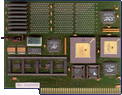
front side
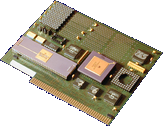
front side
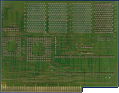
back side
Advert (DE)
1992-05
Advert (DE)
1993-09
Manufacturer Harms Computertechnik, Germany | Date 1991 | Amiga A2000 | Interface CPU slot | Autoconfig ID 2560 / 208 |
- processor
- 68030 14.3 - 40 MHz, PGA
- optional PGA FPU up to 68882 @ 60 MHz
- the CPU and FPU can be clocked separately, either synchronously at 14.3 or 28.5 MHz, or asynchronously by installing oscillators
- memory
- 32 ZIP sockets accept up to 16 MB RAM
- Professional 3000:
- accepts 256k×4 or 1M×4 ZIPs in groups of 16
- possible configurations are 2, 4, 8 or 16 MB
- Professional 3500:
- accepts only 1M×4 ZIPs in groups of 8
- possible configurations are 4, 8, 12 or 16 MB
- only 4 or 8 MB is autoconfigured from the total 8 or 16 MB
- autoconfigured memory supports DMA
- jumper selectable 0 or 1 waitstate
- memory autoconfig disable jumper - allows mapping all the memory outside the Zorro II memory space
- notes
- 68000 fallback mode - can be enabled in the bootmenu by pressing both mouse buttons at startup
- compatibility jumper for A2000-A
- in A2000-A, the 68000 processor has to be removed (no fallback mode)
- jumper settings
| Jumper | Description |
| JP1 | 1-2 - FPU Async OSC Q1 2-3 - FPU Sync |
| JP2 | 1-2 - CPU Async OSC Q2 2-3 - CPU Sync |
| JP4 | 1-2 - Highspeed 2-3 - 14 MHz |
| JP5 | OPEN - Sync Normal CLOSED - Sync Highspeed if JP4 Highspeed |
| JP8 | OPEN - AmigaDOS CLOSED - Other OS |
| JP9 | OPEN - 2 MB CLOSED - 4 MB |
| JP10 | OPEN - Amiga A2000B CLOSED - Amiga A2000A |
| JP11 | OPEN - Autoconfig Memory CLOSED - No Autoconfig Memory |
| JP12, JP13 | CLOSED - Only when JP10 closed |
| JP14 | 1-2 - +0 Waitstate 2-3 - +1 Waitstate |
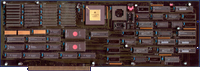
front side
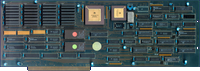
front side
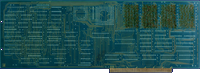
back side
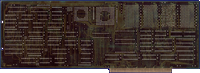
back side
- Professional3000.pdf
User Manual (german) / Bedienungsanleitung
13.8 MB
- Professional3000.dms
install disk for OS1.3 / OS2.0
126 kB
Advert (DE)
1991-04
Advert (DE)
1992-05
Advert (DE)
1993-09
Manufacturer Progressive Peripherals & Software, USA | Date 1991 | Amiga A2000 | Interface CPU slot | Autoconfig ID 756 / 1052026 / 105 |
- processor
- 68040 @ 28 MHz (clocked asynchronously to the A2000 motherboard)
- memory
- eight 30 pin SIMM sockets accept up to 32 MB RAM
- takes 1 or 4 MB SIMMs, 80 ns or faster
- accepts SIMMs in groups of four giving 4, 8, 16 or 32 MB configurations
- not autoconfiguring - requires software
- does not give contiguous 32 bit RAM, it separates 2 MB as 16 bit RAM - RomTagMem is required to make it all 32 bit and contiguous
- up to 8 MB RAM can be configured in the 68000 address space (2, 4 or 8 MB) - access is slower to this RAM
- burst RAM access
- jumper settings
| B1 - | SIMM type: ON - page mode, OFF - Nibble mode |
| B2 - | SIMM size: ON - 1 MB, OFF - 4 MB |
| B4 - | motherboard: ON - german, OFF - B2000 |
| A1 OFF OFF ON ON |
A2 ON ON OFF OFF |
B3 ON OFF ON OFF |
auto-config memory - 0 MB - 2 MB - 4 MB - 8 MB |
| A3 ON OFF |
A4 OFF ON |
- CPU - 68000 - 68040 |
| C1 ON OFF |
C2 OFF ON |
- cache - enabled - disabled |
| C3 ON OFF |
C4 OFF ON |
- burst mode - enabled - disabled |
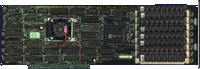
front side
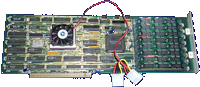
front side
- Progressive040_2000.pdf
user manual
377 kB
- PPS_040-23.dms
Install Disk
CPU040 v2.3, Init040 v2.2, 68040.libary v37.4, Switch v2.3
281 kB - PPS_040-24.dms
Install Disk
CPU040 v2.4, Init040 v2.2, 68040.libary v37.4, Switch v2.3
281 kB - PPS040.DMS
Installer's Heaven
install disk
280 kB
Advert (US)
1991-11
Advert (US)
1992-01
Advert (US)
1992-12
Advert (US)
1993-02
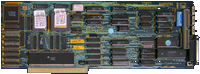
Manufacturer Hardital, Italy | Date 1991 | Amiga A2000 | Interface CPU slot | Autoconfig ID 2080 / 1 |
- processor
- 68030 @ 50 MHz, PGA
- optional PGA FPU, up to 68882 @ 50 MHz
- memory
- sixteen ZIP sockets accept up to 8 MB RAM
- accepts 1M×4 ZIPs in groups of four
- supports 2, 4 or 8 MB configurations
- the memory is mapped into the 16 bit address space - all Fast RAM expansions are ruled out
- DMA devices cannot use this memory - all DMA capable hard disk controllers are ruled out
- SCSI controller
- Zilog Z0538010PSC controller IC
- autoboot ROM (syndisk.device)
- RDB compatible
- 50 pin internal header
- DB25 external connector
front side
- SuperBigBang-1.pdf
Bedienungsanleitung
31 kB - SuperBigBang-TechInfo.pdf
technical information
17 kB
- BigBang.dms
test disk
365 kB - Synthesis.dms
install disk
335 kB
Advert (IT)
1992-10
Manufacturer Supra, USA | Date 1993 | Amiga A500A2000 | - - | Interface side expansion portCPU slot |
- 68HC000 @ 28 MHz
- 16 kB static RAM cache
- without the cache, the processor would only access the Amiga's memory at 7 MHz
- only programs loaded into Fast RAM are available for caching
- disable switch
- can be slowed down by software to 7.14 MHz without rebooting
- A500 version:
- connects to the side expansion port
- passthrough connector
- A2000 version:
- connects to the CPU slot
- not compatible with the Commodore BridgeBoards
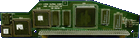
A2000 version, front side
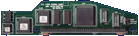
A2000 version, front side
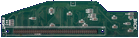
A2000 version, back side
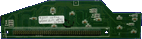
A2000 version, back side
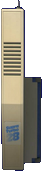
A500 version, top side
- SupraTurbo28-15.dms
install disk v1.5
55 kB
Advert (US)
1993-03
Advert (DE)
1993-06
Advert (DE)
1993-10
Advert (GB)
1993-11
Manufacturer GVP-M, USA | Date 1996 | Amiga A2000 | Interface CPU slot | Autoconfig ID 2017 / 22 |
- processor
- 68060 @ 50 MHz or 68040 @ 33 / 40 MHz
- can be ordered with no CPU or with a new or a recycled 68060
- memory
- four 72 pin SIMM sockets accept 128 MB RAM
- four 64 pin GVP SIMM sockets for backward compatibility
- the 72 pin sockets support 4, 8, 16 or 32 MB SIMMs, the GVP sockets support 4 or 16 MB SIMMs
- each 64 pin slot is linked directly to a 72 pin one - only one of them can be used at the same time
- cannot mix 4 or 16 MB GVP SIMMs
- cannot mix single or double sided 72 pin SIMMs
- a double sided 72 pin SIMM rules out two GVP SIMM sockets
- supports burst RAM access when SIMMs are installed in pairs
- selectable RAM access speed 60-80 ns
- Fast SCSI 2 controller
- 10 MB/s max transfer speed
- 50 pin internal header
- 50 pin external high density connector
- optional 3.5" hard disk mounting kit
- active SCSI termination can be disabled with jumper
- the tekscsi2.device is not NSD compliant, it autoboots FFS partitions only - it looks for filesystems in the Kickstart ROM, but it does not care about filesystems loaded into the RDB area
- notes
- 68000 fallback mode with access to the SCSI controller and memory expansion
- jumper settings
| JR1 - | burst mode: ON - enabled |
| JR2 - | RAM speed: OFF - faster access time |
| JR3 - | burst write: ON - enabled |
| JR4 - | burst read: ON - enabled |
| JR5 - | GVP SIMM: ON - 16 MB, OFF - 4 MB |
| JR6 - | 72 pin SIMM: ON - double sided, OFF - single sided |
| JR7 - | reserved |
| JR8 - | refresh: ON - 4k, OFF - 2k or 4k |
| J1 - | CPU power: 1-2 - 5V, 2-3 - 3.3 V |
| J2 - | CPU clock: 1-2 - 68040, 2-3 - 68060 |
| J3 - | clock: OFF - enabled |
| J4 - | 68000 mode: OFF - enabled |
| J5 - | DTACK pull-up: OFF - enabled |
| J6 - | active SCSI termination: OFF - enabled |
| J7 - | interrupt pending: ON - DMA backoffs, OFF - DMA ignores interrupt |
| J9 - | EPROM type: 1-2 - 27C256, 2-3 - 27C512 |
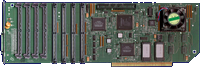
TekMagic 040, front side
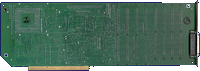
TekMagic 040, back side
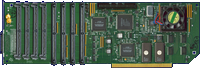
TekMagic 060, front side
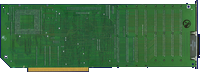
TekMagic 060, back side
- TekMagic.pdf
User Manual
339 kB
- TekMagic.dms
install disk
400 kB - a2060.dms
GVP-M
install disk
347 kB
Advert (US)
1998-05
Advert (US)
1999-03
Manufacturer Computer System Associates, USA | Date 1986 | Amiga A2000 | Interface CPU slot |
- processor card - Turbo Amiga CPU (CSA 00992)
- 68020 @ 14.3 MHz, PGA, synchronous
- Turbo Amiga CPU (CSA 00992B): 68881 @ 14.3 MHz, PGA, synchronous
- Turbo Amiga CPU (CSA 00992D): 68881 up to 25 MHz, PGA, asynchronous
- the 14.3 Mhz chips are overclocked 12 MHz units
- when addressing the Amiga custom chips or the motherboard memory, the 68020 throttles back to 7 MHz
- rev 4.2 motherboards have to be modified (a trace has to be cut and a jumper installed) to get the CPU card work, rev 3.9 motherboards work without problems
- 68000 fallback mode selectable by jumper
- optional static memory card - Turbo Amiga Memory (CSA 00993)
- without this RAM card, the 68020 performs 15% slower than the original 7 MHz 68000, because of the additional time it takes to generate 24 bit addresses for the motherboard memory
- the card fits into a free Zorro slot, but instead of transmitting data via the Zorro bus, it attaches directly to the CPU card via four ribbon cables, and create a 32 bit memory bus
- with the memory card installed, performance is increased to 2.8 times of a standard A2000
- sixteen 32 pin DIP sockets for up to 2 MB static RAM
- takes 32k×8 or 128k×8, 100 ns SRAM chips in groups of four
- the sockets can also take four 28 pin 64k×8 ROM chips containing Kickstart 1.2.2
- does not autoconfig its memory
- multiple Turbo Amiga Memory cards can be installed
- optional 16 bit RAM card adapter - DragStrip
- allows using two 16 bit Zorro II RAM cards as a 32 bit RAM expansion
- consists of a converter card (16/32 Bit Converter) and a connector board for the RAM cards (StepLadder)
- the converter card has to be installed in the first Zorro II slot (closest to the CPU slot) and connects to the CPU card via the same four ribbon cables
- the connector board with the RAM cards are placed between the CPU and converter cards
- any Zorro II RAM cards work like the Commodore A2052 or A2058
- the converter card has four 28 pin DIP sockets for 64k×8 ROM chips containing Kickstart 1.2.2
- notes
- the first 32 bit accelerator system for the Amiga
- all of the cards have four diagnostic LEDs for the four ribbon cables
- does not work with the Commodore A2090 hard disk controller - CSA has its own hard disk system for the card
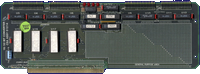
DragStrip 16/32 Bit Converter, front side
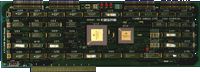
CPU card Rev B, front side
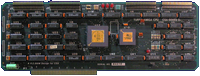
CPU card Rev D, front side
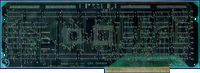
CPU card Rev B, back side
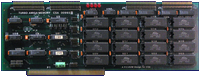
SRAM card, front side
Advert (DE)
1987-12
Advert (DE)
1988-03
Advert (US)
1988-01
Advert (US)
1988-10

Advert (US)
1988-12
Manufacturer Interactive Video Systems, USA | Date 1993 | Amiga A2000 | Interface CPU slot | Autoconfig ID 2112 / 242,243,244 |
- processor
- 68EC030 @ 25 MHz, PGA
- 68882 @ 25 MHz or up to 50 MHz with separate oscillator, PGA
- memory
- eight 30 pin SIMM sockets accept 32 MB RAM
- supports 1 or 4 MB SIMMs, 60 ns or faster
- accepts SIMMs in groups of four giving 4, 8, 16, 32 MB RAM
- two feature connectors intended for A2630 memory expansions
- Access32 needs some rework, otherwise the SCSI controller does not work
- for DKB 2632 compatibility the Extas (external address strobe) jumper has to be set to external
- in 68000 fallback mode up to 8 MB of RAM remains in use - 4 MB (or all) can be disabled for BridgeBoard compability
- burst RAM access can be disabled by jumper or software
- SCSI controller
- the same electronics as the Trumpcard Professional
- 53C80 controller IC
- uses polled I/O, not DMA transfer
- 50 pin internal header
- 50 pin Centronics external connector
- a 3.5" hard disk can be mounted on the card
- autoboot ROM - autobooting requires at least Kickstart 1.3
- when booting from floppy disk, the hard disk is not mounted automatically in order to prevent virus infection - but pressing the left mouse button during startup forces the HD to be mounted
- pressing the right mouse button during startup brings up the Vector Boot Options Menu
- SCSI share networking - Vector's SCSI ID can be set with jumpers
- in 68000 fallback mode the SCSI controller still works
- autoboot disable jumper and SCSI disable jumper
- if run on an A500, the 7 MHz clock has to be fed to pin 9 on the board and the appropriate jumper has to be set
- supported by NetBSD
- jumper settings
| Jumper | Name | Description |
| JP4 | unused | |
| JP5 | SCSI ID for SCSI Share Networking | |
| JP10 | Extas | Address Strobe: external - jumper on left row; internal - jumper on right row |
| JP13 | Enable Burst Mode | |
| JP14 | Dis68kRAM | Disable RAM in 68000 mode (ignored in 68030 mode) |
| JP16 | Diag | stand-alone mode, not used |
| JP17 | DisFastROM | Disable FastROM (Kickstart remapping) |
| JP18 | A500 | A500 mode |
| JP19 | DisSCSI | Disable SCSI (ignored in 68030 mode) |
| JP20 | Autoboot | Enable Autoboot from HDD |
| JP21 | DisHiMem | Disable Hi-Mem (second 4 MB block) in 68000 mode (ignored in 68030 mode) |
| JP12 | RAM size: 4 MB - no jumper; 8 MB - jumper on top row; 16 MB - jumper on bottom row; 32 MB - jumper on both rows |
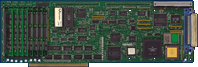
front side
- ivsvector.DMS
Installer's Heaven
install disk
302 kB
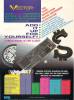
Advert (US)
1993-01
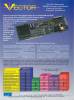
Advert (US)
1993-03
Advert (GB)
1993-02
Manufacturer DKB, USA | Date 1996 | Amiga A2000 | Interface CPU slot | Autoconfig ID 2012 / 23,255 |
- processor
- 68060 @ 50 MHz
- memory
- four 72 pin SIMM sockets accept 128 MB RAM
- supports 4, 8, 16, 32 MB SIMMs, 60-80 ns
- 64 bit interleaved RAM access if identical SIMMs are installed in alternate banks (U312 / U314 and U313 / U315)
- only SIMMs with 1K refresh rate are supported (SIMMs with 4K refresh rate don't work)
- Fast SCSI 2 controller
- 10 MB/s max transfer speed
- 50 pin internal header
- 50 pin external high density connector
- uses wildfirescsi.device
- Ethernet
- DEC Tulip 21040, the only Ethernet controller in Amigas that DMAs directly into fast 32 bit memory
- up to 100 Mb/s transfer speed
- 10Base-T connector
- internal slot for the optional 10Base-2 connector
- has SANA II, but no MNI driver
- notes
- works only with Kickstart 3.x
- flash ROM for firmware upgrades
- two PCI bus slots (one for the Inferno graphics board)
- JP104 jumper setting: ON = 70 or 80ns / OFF = 60ns (all other jumpers are reserved)
- configuration screen can be activated by holding right mouse button during startup
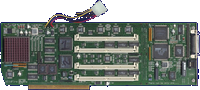
front side
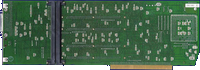
back side
- Wildfire.pdf
user manual
334 kB
- WildFire.dms
install disk
328 kB
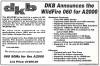
Advert (US)
1995-08
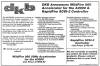
Advert (US)
1995-11
Manufacturer Progressive Peripherals & Software, USA | Date 1992 | Amiga A2000 | Interface CPU slot | Autoconfig ID 756 / 1502026 / 150 |
- processor
- 68040 @ 28 / 33 MHz
- memory
- sixteen 30 pin SIMM sockets accept 64 MB RAM
- supports 1 or 4 MB SIMMs 60-80 ns
- accepts SIMMs in groups of four
- not all of the memory is autoconfigured - requires software
- SCSI 2 controller
- 53C710 controller IC
- 50 pin internal header
- DB25 external connector
- mounting bracket for attaching a 3.5" hard drive to the back of the card
- badly written SCSI driver steals all the CPU time when accessing the devices
- supported by NetBSD and OpenBSD
- notes
- at least one group of four SIMMs must be installed in order to use the card
- in 68000 fallback mode the autoconfig memory is still useable, it just becomes 16 bit
- it's not advised to set more than 2 MB to be autoconfigured
- Jumper Settings
| Jumper | Description | Setting |
| A1,A2 | Memory Configuration | CLOSED-CLOSED - 0 MB OPEN-CLOSED - 2 MB CLOSED-OPEN - 4 MB OPEN-OPEN - 8 MB |
| A3 | Autoboot | CLOSED - Enable OPEN - Disable |
| B1,B2,B3 | Memory Bank Configuration | CLOSED-CLOSED-CLOSED - 0 Banks OPEN-CLOSED-CLOSED - 1 Bank CLOSED-OPEN-CLOSED - 2 Banks OPEN-OPEN-CLOSED - 3 Banks CLOSED-CLOSED-OPEN - 4 Banks |
| B4 | Machine Type | CLOSED - A2000 OPEN - B2000 |
| C2 | Boot Priority | CLOSED - 68040 OPEN - 68000 |
| C3 | Cache Control | CLOSED - Enable OPEN - Disable |
| C4 | Burst Control | CLOSED - Enable OPEN - Disable |
| D1,D2 | Memory Speed (28 MHz Model) | CLOSED-CLOSED - 60ns RAM OPEN-CLOSED - 80ns RAM CLOSED-OPEN - 100ns RAM OPEN-OPEN - undefined |
| D1,D2 | Memory Speed (33 MHz Model) | CLOSED-CLOSED - undefined CLOSED-OPEN - 60ns RAM OPEN-CLOSED - 80ns RAM OPEN-OPEN - undefined |
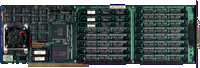
front side
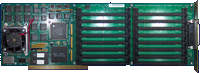
front side
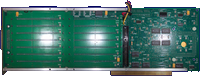
back side
- Zeus040.pdf
User Manual
5.0 MB
- PPS_040-23.dms
Install Disk
CPU040 v2.3, Init040 v2.2, 68040.libary v37.4, Switch v2.3
281 kB - PPS_040-24.dms
Install Disk
CPU040 v2.4, Init040 v2.2, 68040.libary v37.4, Switch v2.3
281 kB
Advert (US)
1992-05
Advert (US)
1992-08
Advert (US)
1992-12
Advert (US)
1993-02